Right click on player to
play TAPS


LCPL. DENNIS GARY MERRYMAN

Born on June 29, 1949
From SPARTA, MICHIGAN
Casualty was on Mar. 5, 1969
in QUANG NAM, SOUTH VIETNAM
HOSTILE, GROUND CASUALTY
GUN, SMALL ARMS FIRE

Panel 30W - - Line 48
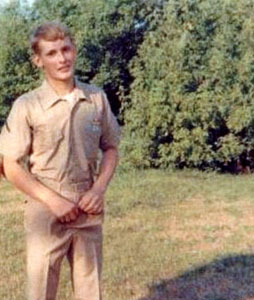
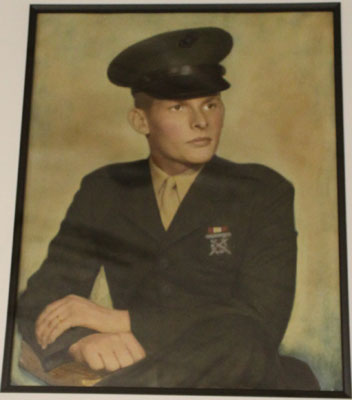
Dennis Gary Merryman
(picture courtesy of his brother, Paul Merryman)
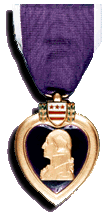
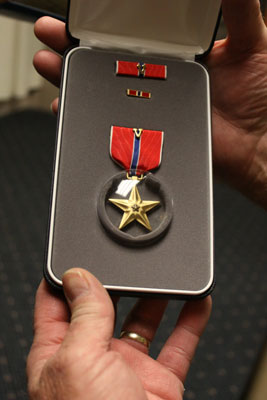
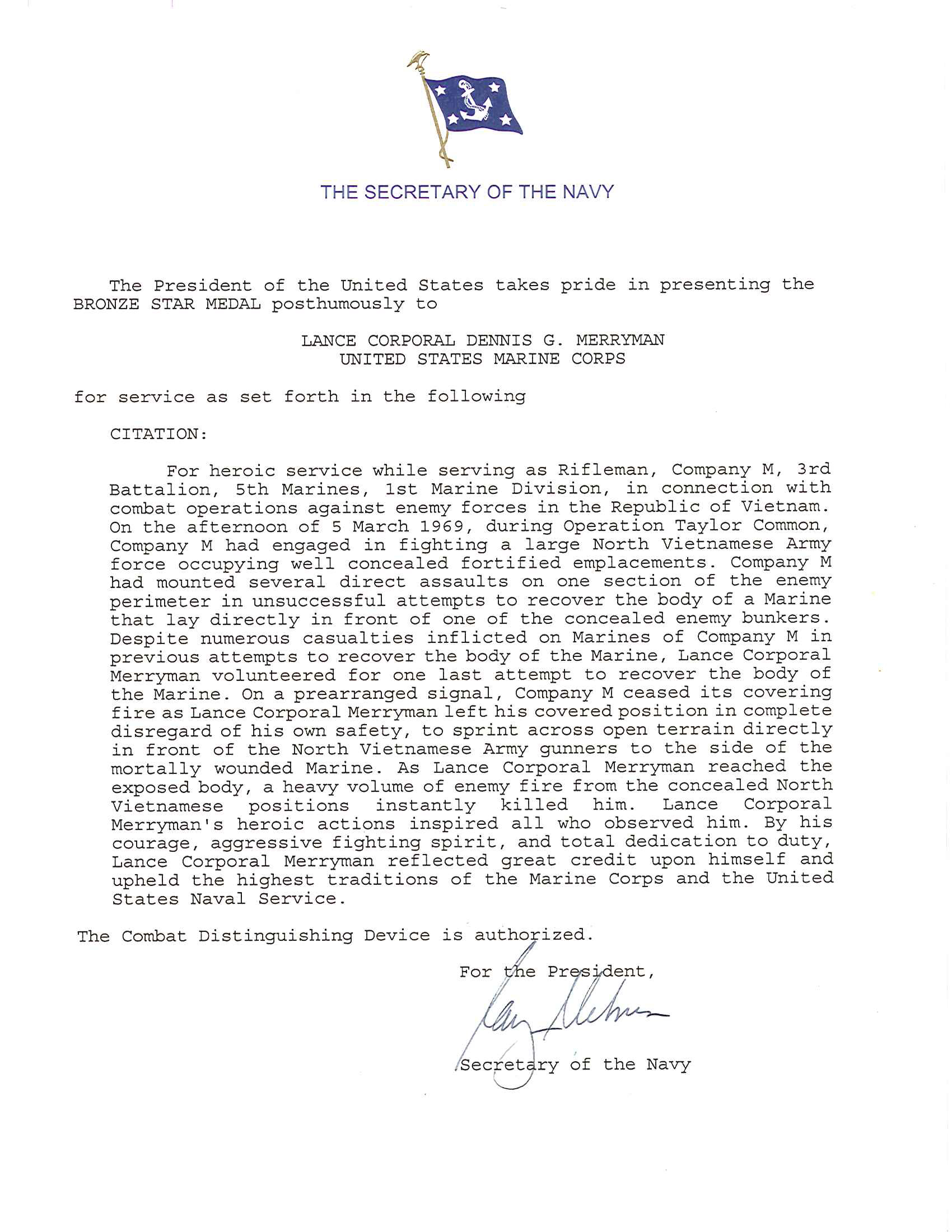
LCpl. Dennis Merryman served with the 3rd Battalion, 5th Marines, Mike Company. He was Killed In Action during Operation TAYLOR COMMON, and awarded the Bronze Star, posthumously, on Sept 28, 2010. His name stands proudly on the Mike 3/5 Wall of Honor alongside the Marines he fought and died with. Semper fi, Brother Marine. We will never forget.

(Click images to enlarge)
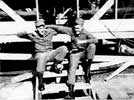

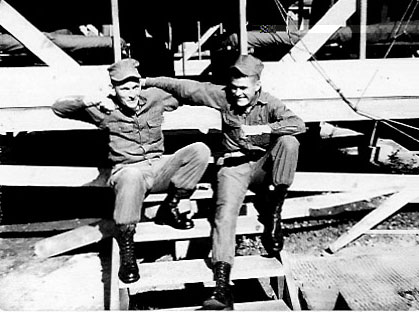
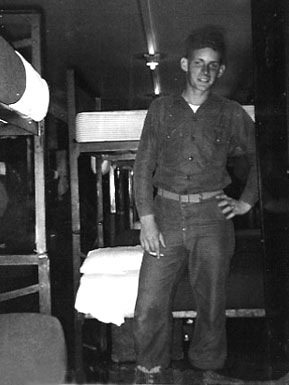
M/3/5 Marines, Dennis Merryman is on the left
(pictures courtesy of Paul Merryman)

I would like to hear from anyone who served with my brother, Dennis.
Semper Fi,
Paul Merryman, M Co. 3/9
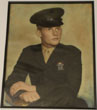

Dennis Merryman home on leave after Basic Training
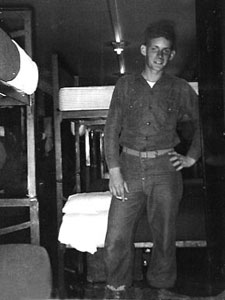
Dennis Merryman, M Co. 3/5

**********************************************

Dennis Merryman awarded the Bronze Star, Memorial Day 2011
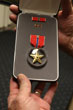
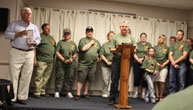
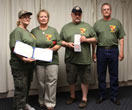
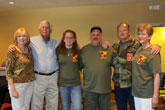
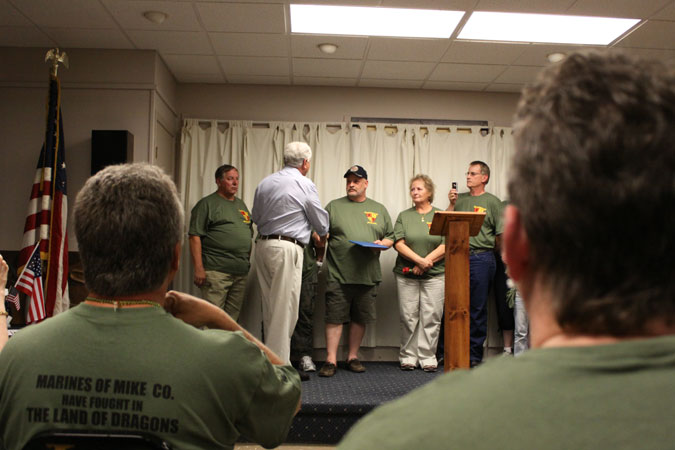
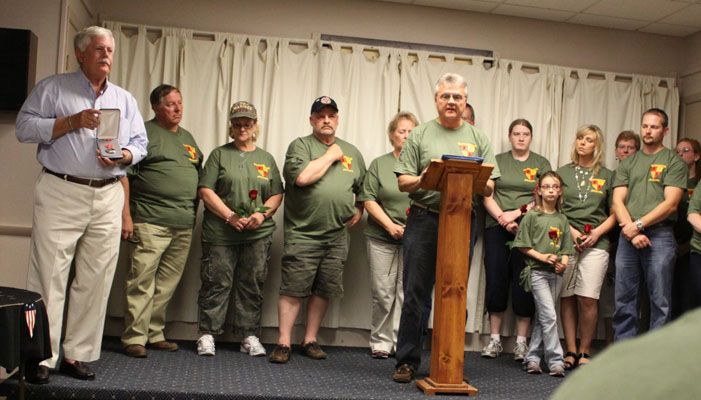
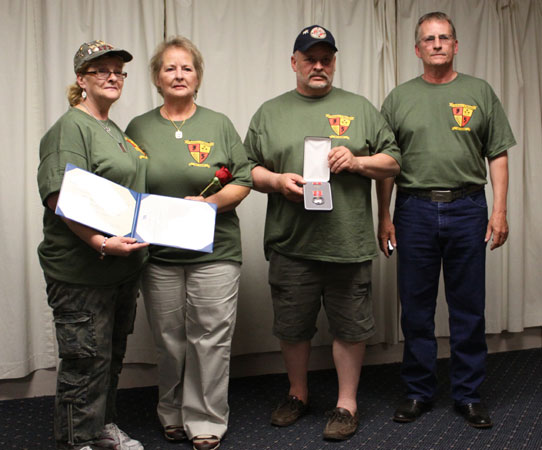
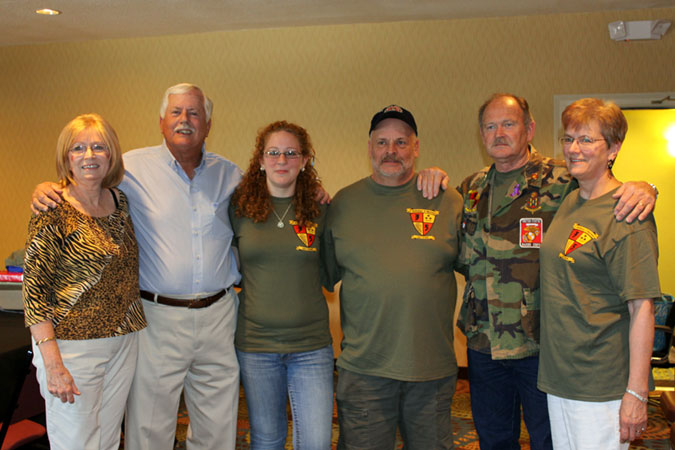
The Merryman family gathered together with M Co. 3/5 Marines at the David Johnston American Legion Post #283 to accept the Bronze Star Medal for Dennis Merryman, 43 yrs. overdue. Grateful thanks to these M Co. 3/5 Marines and to the Merryman's for their tireless efforts to see this award finally come through for Dennis.

Pictures of the award ceremony sent in by Mike Alden
To the Merryman Family, I am most honored to have been a part of securing the Bronze Star for your brother, Dennis.~Mike Alden
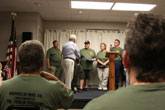

1. Presentation of the Bronze Star to Paul Merryman on behalf of his brother L/Cpl. Dennis Merryman.
2. Paul O'Connell reading the Bronze Star citation for L/Cpl. Dennis Merryman.

3. Janice, Marlene, Paul, and Kelly Merryman
4. Joy and Tom Mahlum, Candice Biddlecom (Paul Merryman's granddaughter), Paul, Mike Alden, Fran (Paul's wife)
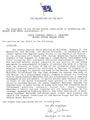

Dennis Merryman's Bronze Star Citation

*****************************

One of the finest Marines our company had

You came up to me and asked for my bush hat. You said to me, "I need one to go 'up there' with." I gave you my bush hat. I also told you to bring it back to me. You uttered something to me and left. I did not care about that bush hat. I wanted you to come back. You went back to the point of contact, to recover Christianson. You went above and beyond the call of duty in my mind, you knowing that recovering Christianson from in front of an enemy bunker was high stakes. You paid the highest price, Dennis. We Marines were speechless when the word came down that we lost you . We couldn't believe it. Dennis, you were one of the finest our company had. My words can not describe the honor I have for you. You remain in my heart and thoughts forever. I will never let go .....May God bless and comfort you forever. Respectfully, Michael Alden
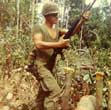

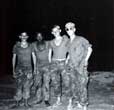
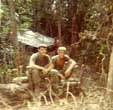
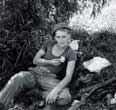
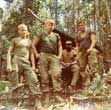
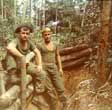
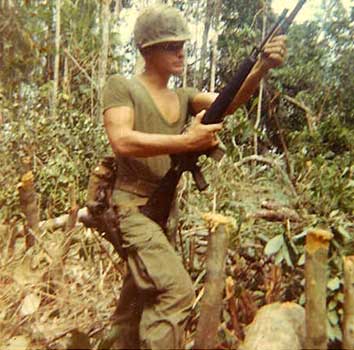
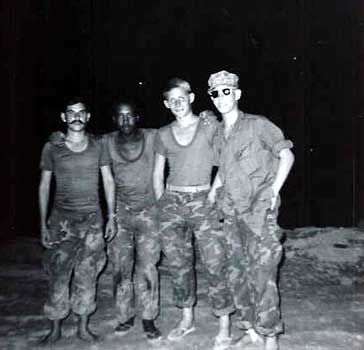
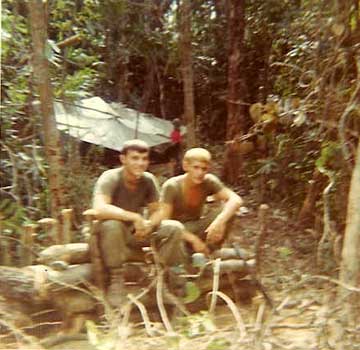
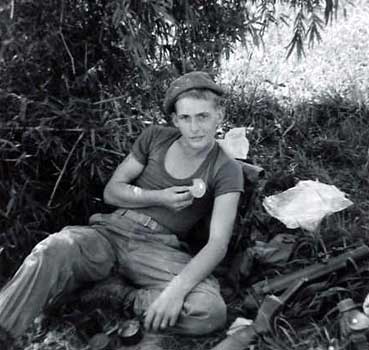
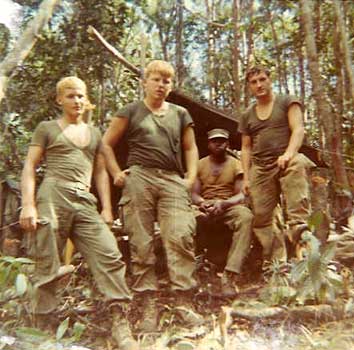
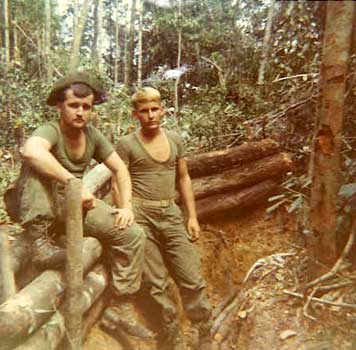
Pictures of M Co. 3/5 Marines Dennis sent home from Vietnam before he was killed

Letter written by Mike McFerrin to Dennis Merryman's brother, Paul Merryman, former M/3/9 Marine, May 2003

Paul,

Your brother volunteered, along with his platoon sergeant, to try to get the body of a dead Marine back from in front of a fortified enemy position up in the mountains (5th Marines operated out of the combat base at An Hoa at the time, about 30 miles south of Danang). I did not meet your brother until some few minutes before he went out on the attempt.

Really eerie looking at these photos of Dennis Merryman for the first time. I probably only saw him six or seven times in brief flashes amongst other unidentifiable Marines while I was there. That's what I remember thinking when he walked up to Thompson and I while we were talking just before their deaths. I also for some reason thought he was relatively new in the bush, but he wasn't.But I only had to look at these pictures for a couple of seconds before his face and that final incident came together in my mind. That IS the guy.

The problem with the "good memory" that I have is that it is not selective. I remember almost EVERYTHING when I remember. I remember the frustration that I was feeling in trying to talk Thompson out of this attempt, and then a bit of shock as I realized that Dennis had also volunteered to go out there with him.

In a few brief seconds after Merryman walked away, my feelings were mixed since I wanted neither to go under the circumstances, but realized that with both out there it might allow at least one of them to survive. It was unclear as to exactly what was going to happen that day, but it was the third straight day of round-the-clock combat up there and my sixth sense was functioning very well. I KNEW that it was going to be a bad day. I have attached my description of the circumstances that was written for his platoon sergeant, Sgt. Leslie Thompson's family~Mike Out

HILL 332
3 March 1969
Michael McFerrin
Third Platoon, Mike Company
3rd Battalion, 5th Regiment, 1st Marine Division

On March 3, 1969, Mike Company was halfway up the ridge heading to Hill 332 when an NVA ambush was encountered. The contact with the enemy was brief and violent. The attackers withdrew shortly under withering return fire from the various portions of the column that were able to fire over or around the fallen point Marine. The scout dog handler was severely wounded and the scout dog was not approachable by anybody except his handler. This caused quite a delay as several Marines using shirts wrapped around their arms subdued the dog so that the wounded handler could be reached. The muzzle was recovered from the wounded Marine’s gear and wrestled on to the dog. With the leash and muzzle firmly in place, the dog was minimally responsive to being handled by somebody new and was secured while a corpsman treated his handler.

The incident caused us to be delayed for almost three hours. Constant attention was required to keep the wounded man alive. CPR was applied multiple times as he began to succumb. The "canopy" of tree layers above us was so thick that it was difficult to find a place where it was thin enough to at least get a sling through to remove the casualty and his dog. A place was finally found, and a medevac was called. It was so late in the day that the Company Commander opted to set us into a perimeter there where the medevac was coming.

While we waited for the medevac, a squad-size patrol was sent further up the trail to recon the area. This patrol ran into a heavily-entrenched force some 70 meters further up the ridge. The squad left 3 men killed in action directly in front of a well-camouflaged bunker when they were finally able to withdraw. The remaining hours of daylight were spent to recover these bodies and simultaneously dealing with two and three man enemy probe attacks that were slipping through the underbrush to hit the backside of our perimeter. Two bodies were recovered from the ambush site and there were three separate unsuccessful attempts to get the last one before shutting down for the very dark night that comes to the forest.

4 March 1969

On March 4th, we expected the enemy probes to stop during daylight hours, but they did not. They launched them every 3 or 4 hours in the daylight. In the meantime, the platoon that had lost the men the day before continued to assault the enemy bunkers in attempts to recover the last body. Many more casualties were taken. The enemy’s movements around our perimeter were increasing. Artillery fire, helicopters, Phantom jets, and "Spooky" AC-130 planes with large rapid fire machine guns began to be employed, firing in a circle around us to try and keep the enemy back as well as to “soften” the defense that kept us from recovering the body. This support continued non-stop through the night, and into the following day.

5 March 1969

Early on March 5th, all platoons began to assist in the attempts to recover the last body but after a couple of attempts our cumulative casualty total for the two days had risen to the point that the Battalion Commander ordered us to get out of there. By that time though, there were not enough of us left to carry all of the dead and wounded and still fight our way out. The Battalion Commander ordered another Marine Company to come to our assistance. They were moved to a point where they would be ready to fight their way in on the following day.

The Company Commander wanted to try at least one more time to recover the Marine’s body. It had already been proven that this would have only a slim chance for success so this time he asked for a volunteer to make a final attempt to get the body. When the call for a volunteer was brought to me, I cringed. I moved through my platoon area stopping at each position to advise them of the request for a volunteer. There were no takers. At least not immediate ones. Maybe some were thinking about it. By the time I returned to my platoon command post, I heard that Sergeant Thompson had already volunteered. I remember shaking my head in an “I should have known” way, plopping down on the edge of my foxhole, and considering the situation.

I felt very close to Sergeant Thompson for several reasons. The main reason was that any Marine in the company who had been there long enough to have experienced and survived the battles fought up until mid-November was truly a veteran in good standing. There were not that many of us. All were considered “pillars of experience” amongst the majority “new people” in the company that helped guarantee the unit’s survival in these worst case scenarios. Regardless of their rank, these men were the real anchors of any unit in battle in Vietnam. Thompson was certainly one of these.

Another of the reasons that I felt an affinity was that he was not only an experienced bush Marine, but he was now also a Platoon Sergeant. Our bush careers were almost parallel. We had both moved up in our different platoons at almost the same rate. From the time that I had first talked with him on September 11, 1968, I had regular communication with him during those times in the bush when we were in a position to do so. I was comfortable in a night defensive perimeter with his platoon having a third of the responsibility for our survival even though his platoon also often suffered from the “too many new guys” syndrome. He, as others and I had to do, balanced the lines at night to deal with this potentially disastrous shortage of experience in our platoons. And it hadn’t escaped my notice that Thompson had become a very serious and a very dedicated Marine since that day of the previous year that he crossed the paddy and attacked that NVA bunker.

We experienced the fellowship of being survivors of many bad battles and the mutual respect earned by engineering increasingly larger portions of the unit’s survival that required more and more of our dependence on each other. But above all of that, I truly liked what he had become. I was not a “lifer” in any sense of the word nor did have any real awe or respect for rank alone or real lifers. That was because I had found out what a “professional” was. I knew that Les Thompson would become a lifer. But long before that time and far more important was that Les Thompson had become a professional Marine. That is how I saw him.

I became less and less comfortable with Sergeant Thompson taking this risk. Whether he was successful or not in recovering this body, Mike Company still had to get off this mountain to a place where we could safely get the wounded, the dead, and the rest of us out. The survival of the company was at stake here and he could be a vital portion of that. My Platoon Commander came from the Company Command Post and gave me the assignment to take my platoon out to the right side of the enemy perimeter and start an assault to distract them while Sergeant Thompson got into position to recover the body.

There was only a few minutes left. I got my platoon up and moving over to the side of our perimeter where we would exit then looked for Les. I didn’t have to go far. There he was, sitting on a felled tree and camouflaging himself. I sat on the log facing him as he applied something to face and neck. Mud, ashes, and I think he had a stick of camouflage paint because I wondered where he got it. We had always used mud and ashes because for some reason we never had the real stuff. I talked with him about the value of what was being done and tried to slip right into his value to the company. He stopped me when he realized that I was trying to say that he shouldn’t go and said, “Well, if I don’t somebody else will have to.”

I spent another 2 or 3 minutes trying to find logic or a way to present it to get him to “unvolunteer.” I realized that I was losing but my head and heart ached with the thought of losing him so I kept at it. Then a young Marine from his platoon walked up to us to tell Thompson that he was ready to go. This is when I found out that Les would not be by himself in the attempt. It was time to go. I let him know that I would give him all that I could on the flank assault, wished him luck and shook his hand. As I walked away I began to seize upon the new fact of the other person being out there. This could certainly improve the chances of success. I used this thought to buoy myself to a positive hopeful level.

It took about 10 minutes for me to brief the platoon and then move out of the perimeter to a starting point for our covering assault. As I walked the width of the assault line to get a view of what everybody faced, I was shocked. I could not get more than eight men across because of the terrain and even the last two or three were in jeopardy because they would not be able to keep up with the others. And I couldn’t even place myself where Thompson would be visible so that I could accurately direct fire. I radioed back to advise the Platoon and Company Commanders of the situation secretly hoping it might change what was happening. Instead, I was told to adapt the assault to the terrain, pick the correct tree to keep all of our fire in front of, and completely cease firing when I was radioed to do so.

We started our assault and it immediately fell apart. The ground on the 50 to 70 degree slope was loose which caused everybody to slip backwards. This turned our eight man front into a 5 man front instantly. I yelled lots of orders but after about five forward steps we found that we could only move forward if we used one hand on a tree to pull ourselves up and forward while firing the rifle with the other. Then the enemy began returning fire and rolling hand grenades down on us. I had actually moved up to become part of the assault to increase our firepower when the other three men fell back so the radio man had to yell to me when the cease fire order came. I issued it and prayed. It was no more than 10 seconds later that I heard the gunfire that wasn’t ours. I knew but didn’t want to. When the radioman indicated I needed to come and get the handset to personally speak to the Platoon Commander, I could not avoid it.~Mike Out

Letter from Ed Browder written to Dennis Merryman's brother, Paul, May 2003

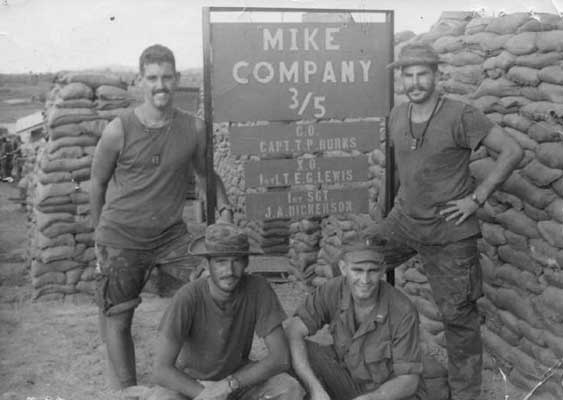
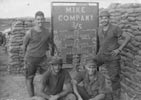
M Co. 3/5 Marines 1969
Kneeling (L to R) Capt. Burns, Lt. Ted Lewis
Standing (L to R) Lt. Ed Browder, Lt. Jim Treadwell

Paul, Wow. Just seeing the name Merryman sent chills down my spine tonight. Never having met your brother I cannot tell you too much about his death or about him as a person or Marine, but I can never forget his name nor Christianson nor Thompson who were also recovered with your brother.

I was a First Force Recon platoon commander at the time, and my platoon just happened to be the ones who were able to get the bodies out. It took a month to retrieve them because the times that we were sent in prior, we were shot out of the LZ. The place was a hot spot...even a month later, we were ambushed by a few NVA/VC types hanging out in that bunker complex. Paul O'Connell was one of Tom Mahlum's Marines, and was on Parker Pen Relay during Hill 332. If he did not know your brother, I can guarantee you that he knows someone who did.

2nd Platoon, 1st Force Recon

Five of those troops retrieved the bodies off Hill 332. That is a very young Ed Browder in the right rear with the "butter bar' on the cover. Three troops from M Co. 3/5 went with us, Capt. Burns, CO; Lankalais; and another whose name escapes me now.
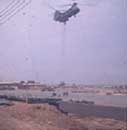
The chopper that took us to Hill 332 for the body recovery
My troops and 3 of M Co's troops, including Capt. Burns on the ladder. The first ladder insert in Marine Corps history.

What I can tell you about the recovery was even a month later, after Agent Orange was dropped to defoliate the area and CS crystals were used to "flood" the area with gas (we went in on a ladder insert...with gas masks on), the bodies of all 3 were found about 5 feet apart, intact, no mutilation (which surprised me at the time), and weapons there too including an M-79 with a bag full of HE rounds. Now that really surprized me.

I am sure that the other guys can give you the information that you seek. I am glad that you found the M/3/5 site and will be able to find out about your brother. This much I can tell you...if he was in either Tom or Jim's platoon, he was led by 2 of the best!! I trusted them with my life 35 years ago ...would do the same today. Ditto for Paul O'Connell. I cannot say better of any man. The troops he served with while young, were also the tops. Hell, we were all young. Good luck. And let me know if I can help in any way.
Semper Fidelis,
Ed Browder
******************************************************